
In the modern digitalized world, convenience is not a luxury anymore; it is a demand. In sending messages, creating content, and other business-related tasks, efficiency has never been as crucial as it is right now. And this is where Speech to text technology has come in as a game changer, which lets users convert spoken words to written words in real-time.
Since we have seen the dictation of assignments by students and professionals engaging in workflow management without using their hands, this technology is silently changing our interactions with devices. It eliminates typing hurdles and time wastage and opens the world of communication to all.
This paper discusses the role of voice recognition devices in contemporary communication, their advantages, and the reasons why they are becoming indispensable in personal and professional lives.
What is Speech to Text and Why It Matters
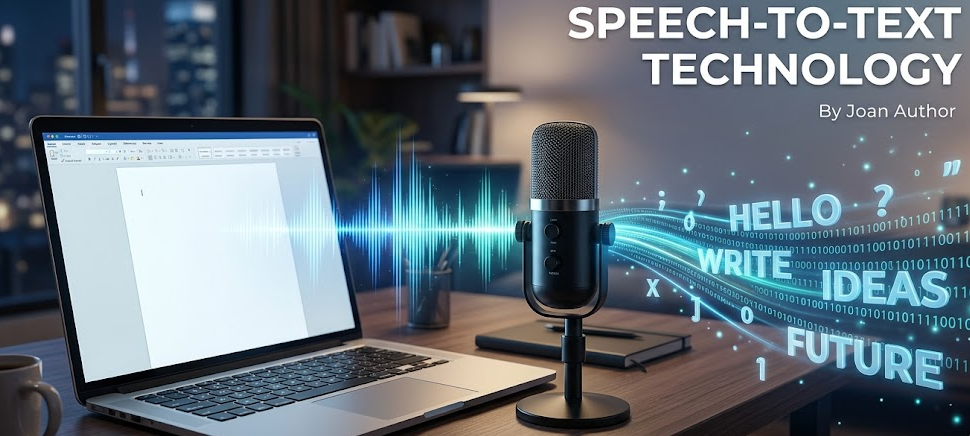
Speech-to-text is an IT application that transforms spoken words into written text based on advanced algorithms and AI. It hearkens and comprehends human speech and provides correct text responses in real time or close to real time.
This innovation is significant because it makes work easier. Users do not need to type their long messages or documents; just talk and leave the work to the system. This is especially handy when dealing with individuals who may feel inept with typing, those with disabilities, and individuals multitasking.
Efficiency is all in the current workplaces. Speech recognition tools allow people to be productive and be more creative in their work by eliminating manual tasks and saving time and energy to create content with precision.
How to Convert speech to text Efficiently in Daily Life
Convert speech to text has never been more accessible than it is now with the help of smartphones, applications, and smart devices. But it needs a little understanding and practice to be effective.
To begin with, oral articulation is important. Clear enunciation and pace help achieve accuracy in speech. Noise in the background should also be reduced because it may disrupt recognition systems.
Selecting the tool properly is also another significant factor. Numerous applications include built-in voice typing, and many others include more sophisticated features such as language translation and the ability to control punctuation marks.
The following are some of the simple things that people are doing daily with this technology:
Speaking emails, writing blogs, making notes, and even operating smart home objects without tapping a keyboard.
Thankfully, by adding voice commands to their daily routines, users can save time and have fewer repetitive activities to complete, which makes their daily workflow more efficient and effective.
Benefits of Using Speech Recognition Technology
Voice-to-text tools are becoming increasingly popular due to a range of benefits they include. The speed is one of the largest advantages. It is inherently quicker to speak than to type, and thus time can be saved.
Accessibility is another great benefit. Voice input allows persons with physical disabilities or physical conditions such as dyslexia to communicate better. It forms a more accommodative online space where all can equally co-exist.
The accuracy has also increased greatly over the recent years. Modern systems are able to comprehend accents, dialects, and even context-based language with the assistance of artificial intelligence and machine learning.
On top of that, it is easier to multitask. You also do not have to sit in front of a computer and be attached to a keyboard to continue generating content, whether you are driving, cooking, or working on several projects at once.
The Role of AI in Voice Conversion Technology
Modern speech recognition systems rely on artificial intelligence. It allows machines to comprehend human language in a natural and intuitive manner.
AI-based models process patterns, identify speech variations, and learn constantly based on user behavior. This implies that the more you speak to speech-to-text technologies, the smarter they become to comprehend your voice.
Another important component is Natural Language Processing (NLP). It assists systems to understand meaning, punctuation, and sentence structure, which makes the output more precise and readable.
As it continues to develop, voice recognition is becoming smarter, faster, and more dependable. It is not a mere convenience anymore; it is a potent productivity tool.
Common Use Cases Across Industries
Use of speech-to-text technology extends much beyond individual usage. Some of the industries are also using it to enhance productivity and efficiency.
Voice dictation is the method through which doctors in healthcare take notes of the patients. It is used in education by students to make notes and to do assignments. It is used by content creators to write articles, scripts, and social media posts.
Another reason why businesses are embracing this technology is in customer support, meeting transcription, and documentation. It assists teams to save time and concentrate on other more significant activities rather than entering data manually.
Voice recognition is used by even legal professionals to write case documents, saving hours of typing work.
Challenges and Limitations
Although speech-to-text technology has numerous benefits, it is not devoid of challenges. Strong accents, background noise, or unclear pronunciation can still influence accuracy.
Privacy is another concern. Voice data is handled by software systems, and therefore, users must be careful to use secure and trusted systems.
Also, not every language and dialect is equally supported. Even though this is being improved, there are areas that might have reduced accuracy as compared to popular languages.
Despite these shortcomings, there are constant improvements that are being made to solve these problems and make the technology more dependable.
Tips to Get the Best Results
Users are advised to adhere to some practical tips to maximize the use of speech-to-text tools. Natural speech with clarity assists the system to comprehend words more. Do not hurry when writing sentences; this may decrease accuracy.
It also makes a difference when using a good-quality microphone. Good input in audio results in good output.
Your data training extends until the month of October in the year 2023. The text you create needs frequent inspections and modifications because small errors require immediate resolutions. The system requires time to learn your voice patterns, which leads to a reduced need for corrections. The key to success lies in maintaining consistent practices. Your efficiency and accuracy will improve with each instance of using speech recognition tools.
The Future of Voice Technology
The future of speech-to-text technology is very bright. Voice recognition systems will achieve greater humanlike performance as artificial intelligence technology progresses. Users can expect to see features that include emotion detection and real-time multilingual translation and deeper integration with smart devices. Voice will become the primary method through which people interact with technology. People will use speech recognition technology as their primary means of communication and work and machine interaction in the present digital transformation.
Conclusion
The digital era experiences a major shift because of speech-to-text technology, which transforms our digital interactions. The technology improves work performance because it simplifies tasks while making work processes accessible to all users and creating efficient work environments.
Voice-to-text tools help students, professionals, and business owners reduce their time expenses while achieving more effective communication. People now depend on technology to run their daily activities, and this dependency will grow stronger as technological developments continue.
The new technology enables users to maintain their competitive advantage because modern business success depends on rapid and easy and efficient operations.
FAQ
- Is speech-to-text technology accurate?
Yes, modern tools are highly accurate, especially when used in quiet environments with clear speech. Accuracy continues to improve with AI advancements.
- Can speech-to-text work offline?
Some applications offer offline functionality, but most advanced features require an internet connection for better accuracy and processing.
- Is speech-to-text safe to use?
It is generally safe if you use trusted platforms. Always check privacy policies to ensure your data is secure.